Gyrodactylus salaris
Gyrodactylus salaris
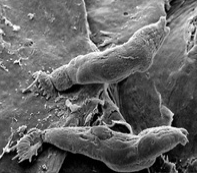
The parasite Gyrodactylus salaris poses a major threat to Atlantic salmon stocks in the freshwater phase in areas where it has been introduced. Mortality of salmon parr in some Norwegian rivers infected by the parasite is as high as 98%. It is a small parasite (0.5mm in length) infecting the skin, gills and fins of fish and is capable of rapid multiplication.
The parasite is most likely endemic to the rivers draining into the Baltic Sea but has been introduced to Norway, to Atlantic drainages in Sweden and to Rivers draining into the White Sea / Barents Sea in Russia. Since its introduction to Norway in the 1970s and 1980s, G. salaris has caused enormous ecological and economic damage, with the costs associated with eradicating the parasite currently standing at around 2 billion Norwegian Krone (as of March 2026). It has also had a negative impact on populations of Atlantic salmon in the Russian river Keret and possibly also in rivers on the Swedish west coast.
In response to the threat posed by G. salaris, NASCO’s North-East Atlantic Commission has adopted a ‘Road Map to Enhance Information Exchange and Co-operation in Monitoring, Research and Measures to Prevent the Spread of G. salaris and Eradicate it if Introduced’ NEA(23)14.
Each year, members of the NEAC report to the Commission’s Annual Meeting under this Road Map (these reports can be found in NEAC Annual Meeting Papers) and every three years NASCO’s Working Group on Gyrodactylus salaris meets, bringing together experts on the parasite from around the North-East Atlantic for more detailed information exchange and a review of progress in implementing the Road Map.
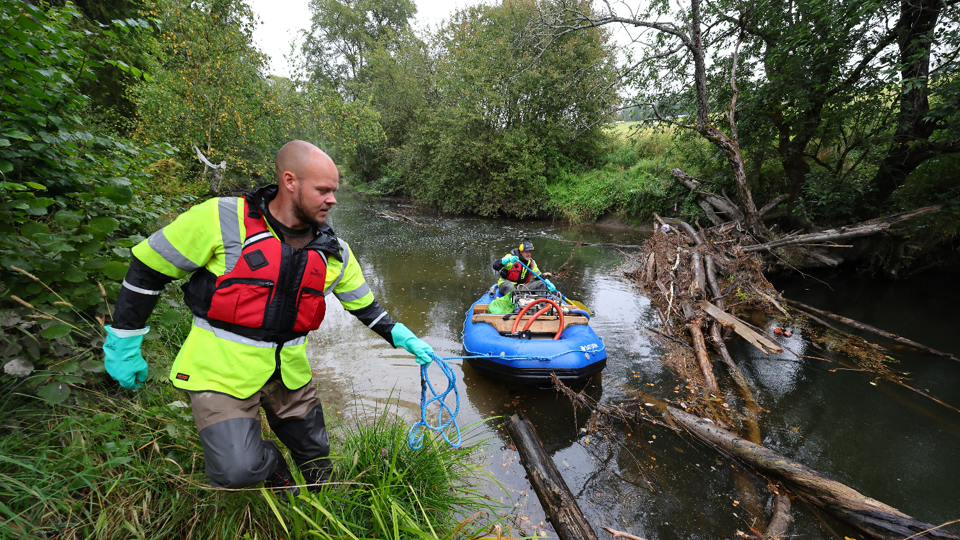
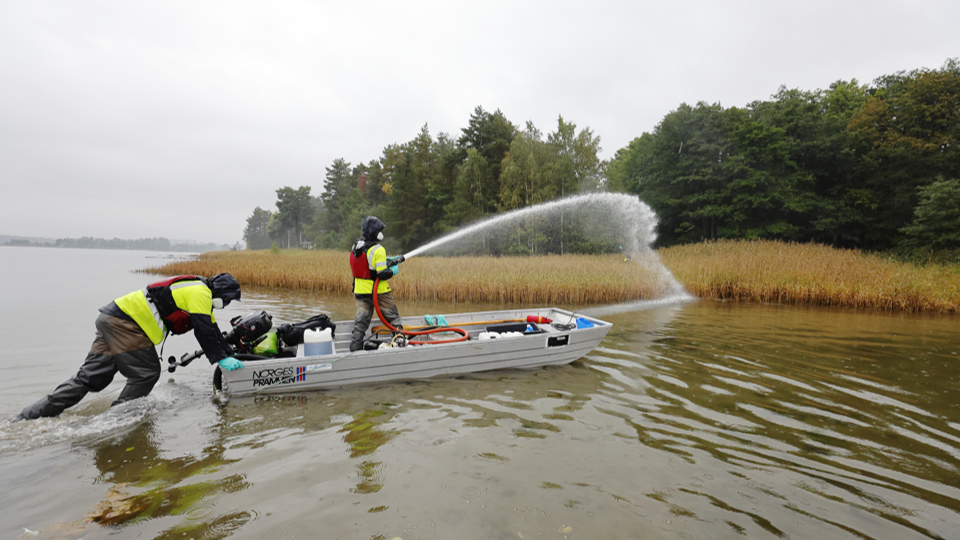
The Working Group on Gyrodactylus salaris in the North-East Atlantic Commission area
The most recent meeting of the Working Group was held in 2026 and the report will be made available shortly. Previous reports are available below:
- 2020 Report of the Working Group on Gyrodactylus salaris: The Synonymisation of Gyrodactylus thymalli and Gyrodactylus salaris. Implications for NASCO, NEA(20)06
Publicity Materials
The Road Map also asks NEAC members and their jurisdictions to develop publicity material on the threat posed to wild Atlantic salmon by the parasite and ways to prevent its spread. Such material has been provided to the NASCO Secretariat by:
World Organisation for Animal Health (WOAH)
The World Organisation for Animal Health (WOAH) includes a section on Gyrodactylus salaris its Aquatic Animal Health Code.
Other Relevant Publications
- Hansen H, Ieshko E, Rusch JC, Samokhvalov I, Melnik V, Mugue N, Sokolov S and Parshukov A. 2022. Gyrodactylus salaris Malmberg, 1957 (Monogenea, Gyrodactylidae) spreads further – a consequence of rainbow trout farming in Northern Russia. Aquatic Invasions Volume 17, issue 2: 224–237, http://dx.doi.org/10.3391/ai.2022.17.2.06
- Karlssen, S., Bolstad, G.H., Hansen, H., Jansen, P., Moen, T. and Noble, L.R. 2020. The potential for evolution of resistance to Gyrodactylus salaris in Norwegian Atlantic salmon. NINA Report 1812, 68 pp.
- Paladini, G., Shinn, A.P., Taylor, N.G.H., Bron, J.E. and Hansen, H. 2021. Geographical distribution of Gyrodactylus salaris Malmberg, 1957 (Monogenea, Gyrodactylidae). Parasites Vectors, 14:34, 20 pp.
- Thrush, M.A., Hill, T. and Taylor, N.G.H. 2019. Development of a non?lethal hydrogen peroxide treatment for surveillance of Gyrodactylus salaris on trout farms and its application to testing wild salmon populations, Transboundary and Emerging Diseases, 66 (5), 2107-2119.